Power doesn’t warn. It doesn’t pause. One misstep during maintenance—just one unlabeled breaker, one overlooked circuit—can turn routine servicing into a fatal incident. The electrical lockout tagout procedure isn’t just a compliance checkbox; it’s the last line of defense between qualified workers and catastrophic energy release.
Despite decades of safety standards, OSHA consistently ranks improper lockout tagout (LOTO) among the top 10 most frequently cited violations. Electrical systems, in particular, demand precision. Residual voltage, backfeed, and stored energy in capacitors can energize a de-energized line in seconds. That’s why a disciplined, documented electrical lockout tagout procedure isn’t optional—it’s essential.
This guide breaks down the real-world mechanics of LOTO for electrical systems, from identifying energy sources to verifying isolation, with practical insights that go beyond the manual.
What Is the Electrical Lockout Tagout Procedure?
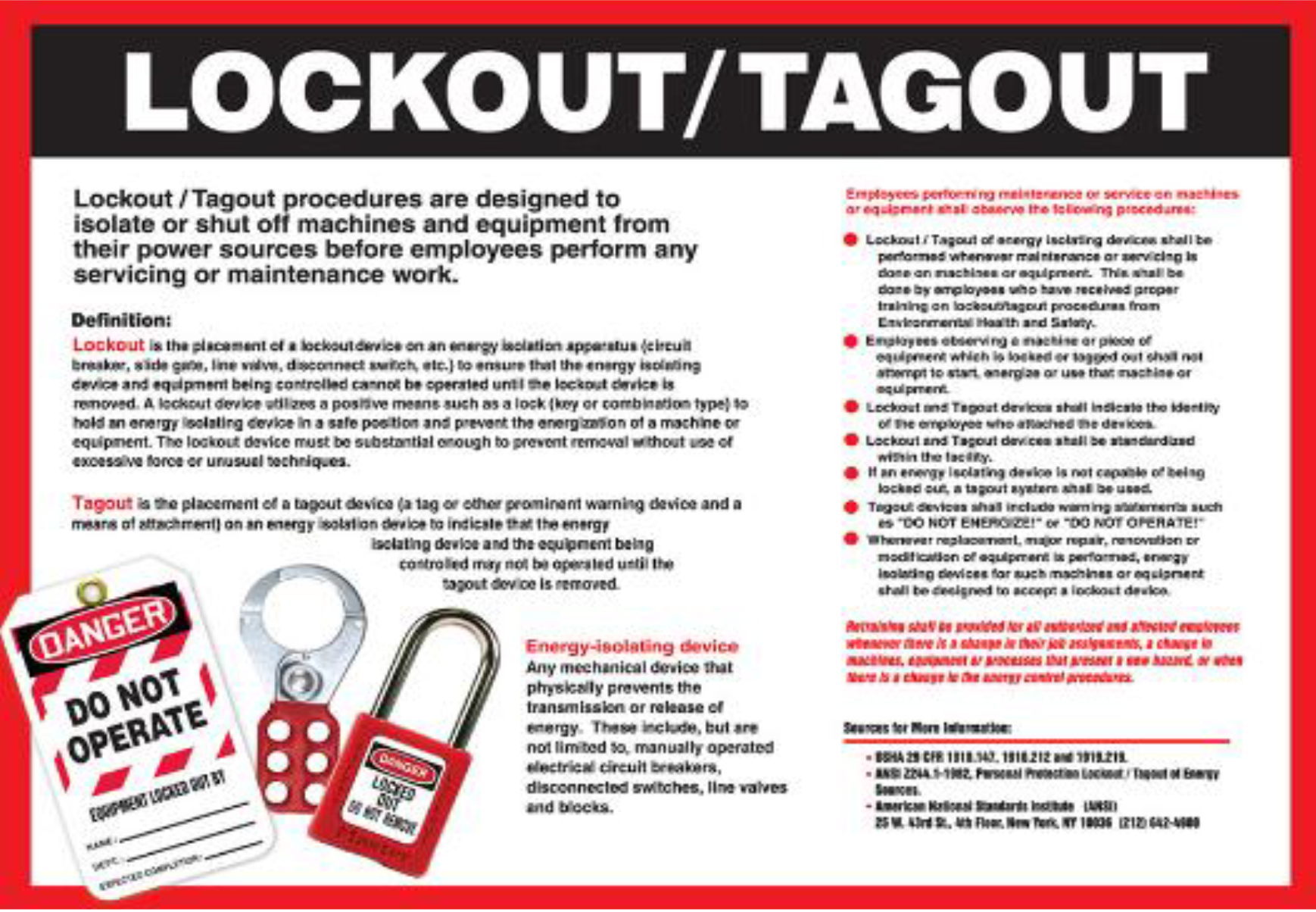
The electrical lockout tagout procedure is a structured safety process used to isolate electrical energy sources during maintenance, repair, or servicing of equipment. It prevents unexpected startup or energizing of machinery, protecting workers from electrocution, arc flash, and other hazards.
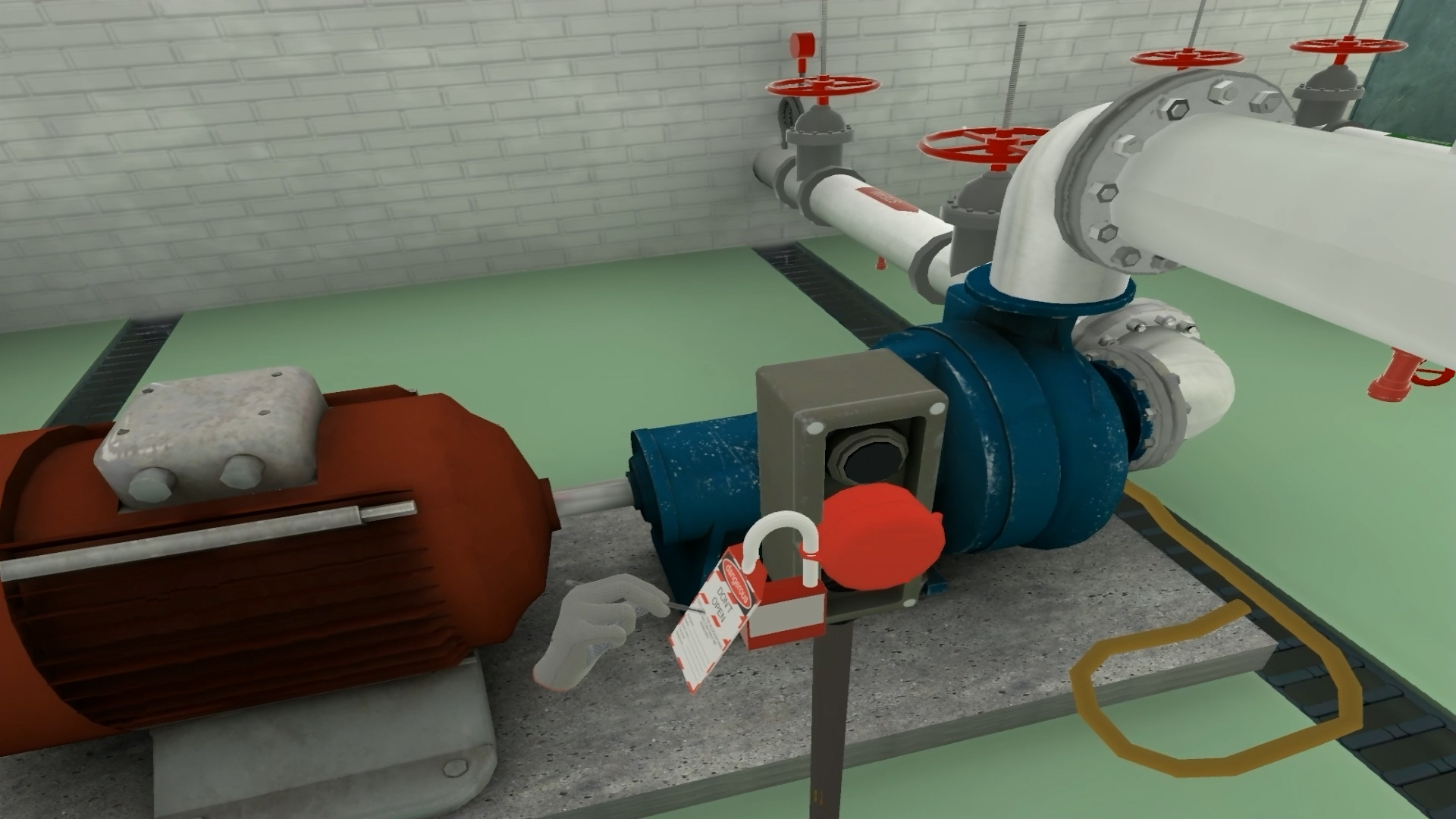
At its core, LOTO combines two actions: - Lockout: Physically securing an energy-isolating device (like a circuit breaker or disconnect switch) with a lock. - Tagout: Attaching a warning tag that identifies the worker, reason for shutdown, and time of isolation.
While both are critical, lockout is the primary control. Tags alone don’t stop energy flow—they rely on human compliance. OSHA permits tagout only when a lock cannot be applied, and even then, additional protective measures are required.
Why Electrical LOTO Is Different from Mechanical Systems
Electrical systems introduce unique risks that mechanical-only LOTO procedures often overlook.
Residual Energy & Capacitor Discharge Unlike hydraulic or pneumatic systems, electrical circuits can store lethal voltage in capacitors long after power is cut. A motor control center may appear dead, but a discharged capacitor can deliver a 480V shock minutes later.
Backfeed Risks Improperly isolated circuits can receive power from alternate sources—like generators, UPS systems, or interconnected panels. This backfeed scenario is a leading cause of fatal electrical incidents during maintenance.
Arc Flash Potential Even with power off, improper testing or accidental re-energizing can trigger arc flashes exceeding 35,000°F. Proper PPE and verification are non-negotiable.
Real-World Mistake: A technician in a Midwest manufacturing plant bypassed lockout, assuming a motor was isolated. Unbeknownst to him, a backup generator had automatically kicked in, backfeeding the panel. The result: severe burns and a six-figure OSHA fine.
Electrical LOTO isn’t a one-size-fits-all process. It demands system-specific knowledge, proper tools, and rigorous verification.
The 6-Step Electrical Lockout Tagout Procedure
A standardized approach reduces human error. Follow these steps for every electrical LOTO event:
#### 1. Preparation: Identify Energy Sources Before any work begins, gather information on all energy sources connected to the equipment. Use single-line diagrams, panel schedules, or equipment manuals.
Example: A 200HP conveyor system may be powered by a 480V feeder, but also tied to a 120V control circuit from a separate panel. Both must be locked out.

Key questions: - Is there a primary disconnect? - Are there secondary circuits (controls, sensors, lighting)? - Could stored energy (capacitors, batteries) pose a hazard?
#### 2. Notification: Alert Affected Personnel Inform all operators and nearby workers that a shutdown is imminent. This prevents someone from inadvertently restoring power or trying to restart equipment.
Use intercoms, signage, or direct communication—never assume awareness.
#### 3. Shutdown: Turn Off Equipment Properly Use normal stopping procedures. Never rely on emergency stops alone, as they may only interrupt control circuits, not main power.
Label the shutdown sequence in your LOTO plan—especially for complex systems like PLC-controlled lines.
#### 4. Isolation: Disconnect and Lock Out Physically open disconnects, circuit breakers, or pull-out fusible switches. Apply individual locks and tags.
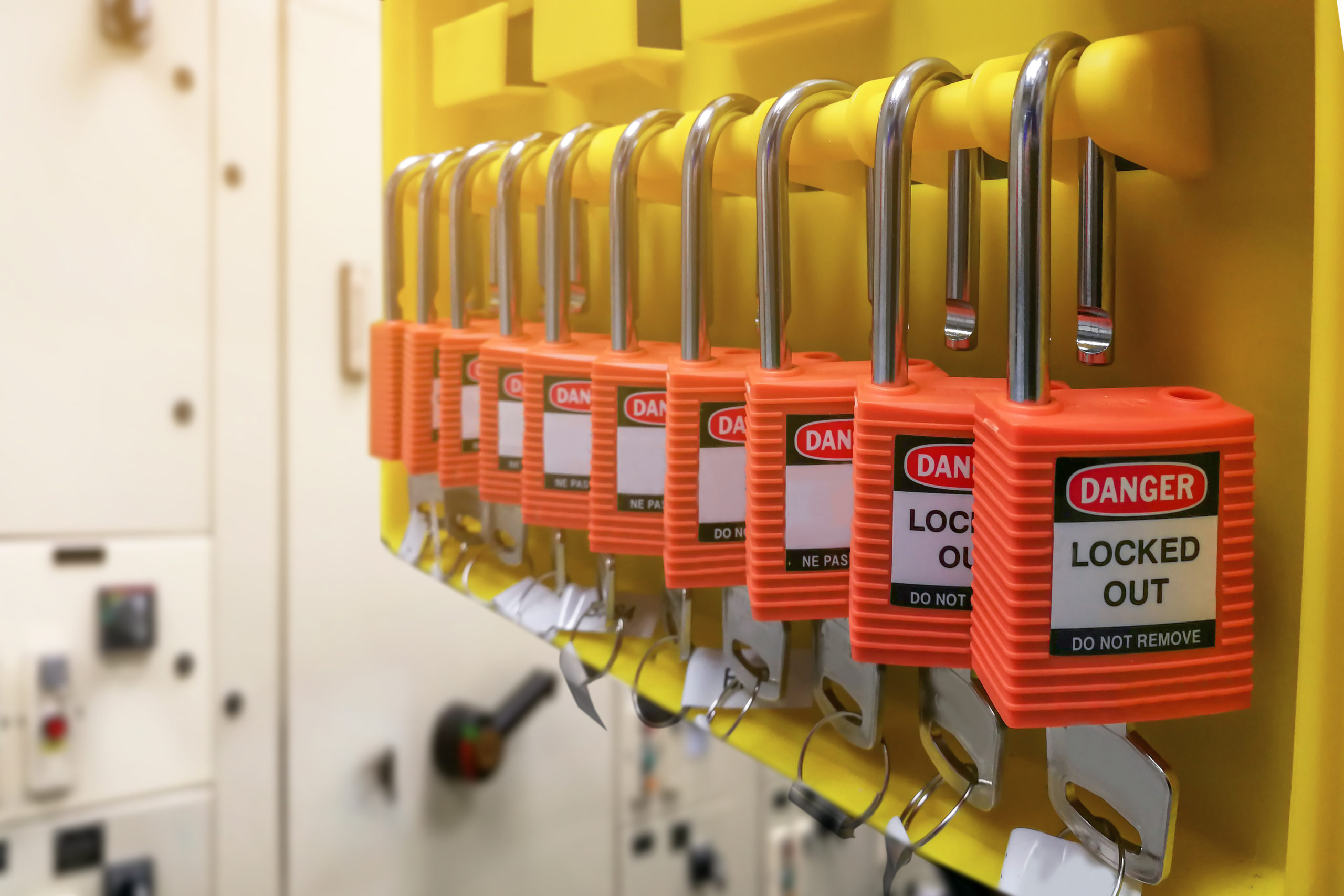
Each worker must use their own lock (individual lockout). Group lockout boxes are acceptable only if each worker’s lock secures the isolated point.
Pro Tip: Use color-coded locks by department or shift. Red for maintenance, blue for production, etc., aids visual tracking.
#### 5. Control Stored Energy: Dissipate or Block Discharge capacitors using grounding sticks. Verify with a voltage tester rated for the system voltage.
For equipment with springs, elevated loads, or pneumatic accumulators, apply mechanical restraints—even if the hazard isn’t electrical.
#### 6. Verification: Test for Zero Energy This is the most critical step—and where most shortcuts occur.
Use a properly rated multimeter or voltage tester to confirm: - No voltage between phases - No voltage to ground - Control circuits are also de-energized
Test the tester first on a known live source, then the target, then the known source again (live-dead-live test). This ensures your tool is functional.
Never assume. Always verify.
Common LOTO Violations and How to Avoid Them
Even experienced teams make mistakes. Here are recurring issues found in OSHA reports:
- Skipping Verification: “I saw the breaker off, so I assumed it was safe.” Assumption kills. Always test.
- Using Master Keys or Shared Locks: Defeats the purpose of personal accountability.
- Tag-Only Systems Without Backup Controls: Permitted only under strict conditions—documented procedures, additional PPE, and frequent inspections.
- Failing to Address All Energy Sources: Control circuits, indicator lights, and data lines often remain live.
- Inadequate Training: Authorized vs. affected employee roles are frequently confused.
Workflow Tip: Conduct monthly LOTO audits. Pick a random machine, review the procedure, and observe a mock lockout. Identify gaps before an incident does.
Tools and Equipment for Effective Electrical LOTO
The right tools make compliance efficient and reliable. Invest in quality gear that withstands real-world conditions.
| Tool | Purpose | Key Features |
|---|---|---|
| Lockout Hasps | Allow multiple locks on one isolation point | UV-resistant, non-conductive |
| Circuit Breaker Lockouts | Secure breakers in OFF position | Fits common brands (Square D, Siemens) |
| Voltage Testers (CAT IV) | Verify zero energy | Live-dead-live capability, bright indicators |
| Lockout Stations | Organize locks, tags, and devices | Wall-mounted, labeled compartments |
| Personal Locks | Individual control | 1” shackle, keyed-alike options |
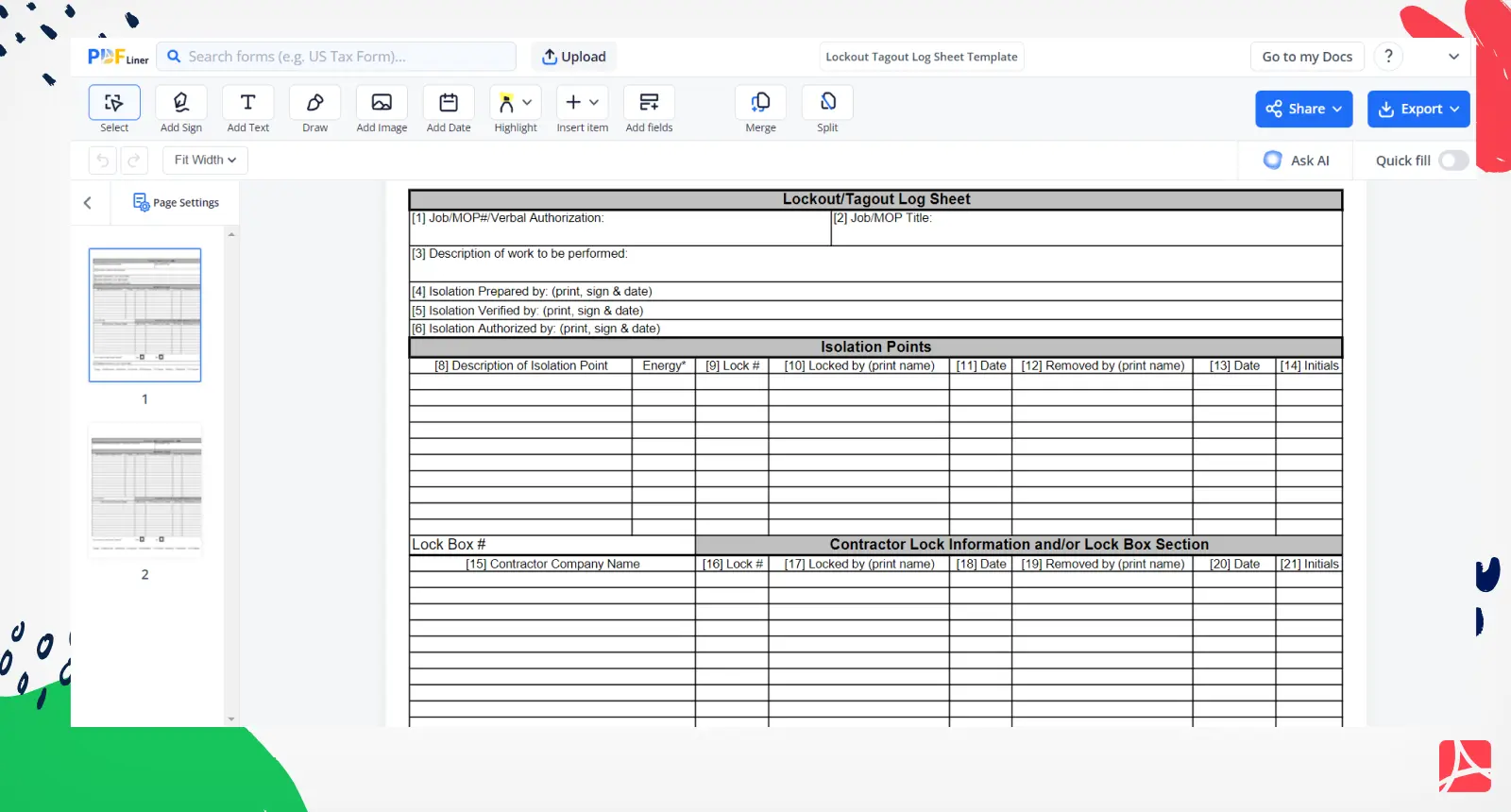
| Storage Tags | Document lockout details | Weather-resistant, pre-printed fields |
Use lockout kits tailored to your facility. A small workshop may need only 10 locks and testers, while a plant with multiple shifts might require a centralized lockout cabinet with 50+ components.

Who Is Responsible? Roles in LOTO Compliance
OSHA distinguishes two key roles:
Authorized Employee - Trained to perform LOTO - Executes the procedure personally - Understands energy types and magnitudes - Verifies isolation
Affected Employee - Operates or uses the equipment - Trained on LOTO purpose, but does not perform it - Knows not to remove locks or restart locked-out machines
Misclassifying an affected employee as authorized is a common compliance gap. Training records must clearly define each worker’s level.
Realistic Use Case: At a food processing plant, line operators (affected) shut down a mixer for cleaning. Maintenance (authorized) performs LOTO before opening the bowl. The operator sees the lock and knows not to interfere—even if production is behind.
Integrating LOTO into Maintenance Workflows
LOTO shouldn’t slow productivity—it should enable safer, more predictable operations.
Best Practices: - Embed LOTO steps in work orders - Use digital checklists via mobile CMMS apps - Schedule lockout during planned downtime - Pre-stage lockout kits near high-risk equipment
A steel fabrication facility reduced unplanned outages by 22% after integrating LOTO into preventive maintenance schedules. Downtime became predictable, and safety incidents dropped to zero over 18 months.
Limitation to Note: Emergency repairs may pressure teams to bypass LOTO. Never allow exceptions. If a hazard exists, escalate—don’t improvise.
Closing: Make LOTO a Culture, Not a Chore
The electrical lockout tagout procedure works only when it’s lived, not just documented. Post clear procedures near panels. Train relentlessly. Audit frequently. Empower every worker to stop work if LOTO isn’t followed.
Your goal isn’t just OSHA compliance. It’s ensuring every electrician, technician, and operator goes home unharmed. That starts with a single lock, a single tag, and an unwavering commitment to zero energy.
Implement your LOTO plan today—not after an incident forces you to.
FAQ
What is the first step in an electrical lockout tagout procedure? The first step is preparation: identifying all electrical energy sources connected to the equipment, including primary power, control circuits, and backup feeds.
Can tagout be used instead of lockout on electrical systems? Yes, but only if a lock cannot be applied. Tagout alone requires additional safety measures, such as increased inspections and employee training, per OSHA 1910.147.
How do you verify zero energy in an electrical system? Use a properly rated voltage tester to check all conductors and control circuits. Perform a live-dead-live test to confirm the tester is working before and after.
Who can remove a lockout device? Only the authorized employee who applied the lock may remove it, unless under a formal retrieval procedure involving supervision and verification.
Are control circuits included in electrical LOTO? Yes. Control circuits (e.g., 120V or 24V) must be locked out if they pose a hazard during servicing, even if they don’t power the main motor.
What PPE is required during electrical LOTO? Appropriate arc-rated clothing, insulated gloves, face shield, and voltage-rated tools are required when verifying isolation or working near energized parts.
How often should LOTO procedures be reviewed? OSHA requires annual inspections. However, high-risk environments should audit quarterly or after any incident, near-miss, or equipment change.
FAQ
What should you look for in Electrical Lockout Tagout Procedure: A Complete Safety Guide? Focus on relevance, practical value, and how well the solution matches real user intent.
Is Electrical Lockout Tagout Procedure: A Complete Safety Guide suitable for beginners? That depends on the workflow, but a clear step-by-step approach usually makes it easier to start.
How do you compare options around Electrical Lockout Tagout Procedure: A Complete Safety Guide? Compare features, trust signals, limitations, pricing, and ease of implementation.
What mistakes should you avoid? Avoid generic choices, weak validation, and decisions based only on marketing claims.
What is the next best step? Shortlist the most relevant options, validate them quickly, and refine from real-world results.